EDC Configuration in Days, Not Weeks
Trialhelix generates eCRF form structures, visit schedules, and edit check logic from your protocol and DMP — cutting EDC setup from 3–5 weeks to 4–6 days per study.
How the EDC Module Works
The EDC configuration process starts with your protocol synopsis and Data Management Plan. Trialhelix parses the study objectives, visit schedule, and endpoints to generate an initial eCRF structure — forms, pages, fields, and their data types.
Your CDM team reviews and approves the generated structure before any data collection begins. The review creates an auditable approval record. After approval, edit checks are applied from the rule library — matching your study design's specific data types and ranges.
- Protocol ingestion in DMP template format or manual specification
- eCRF form generation: demographics, vitals, AE, concomitant medications, labs, PK sampling
- Edit check library: range checks, consistency checks, cross-form derivations
- Visit schedule matrix with form assignment and mandatory/conditional logic
- CRF completion guidelines auto-populated per field type
- UAT environment for CDM and investigator sign-off before go-live
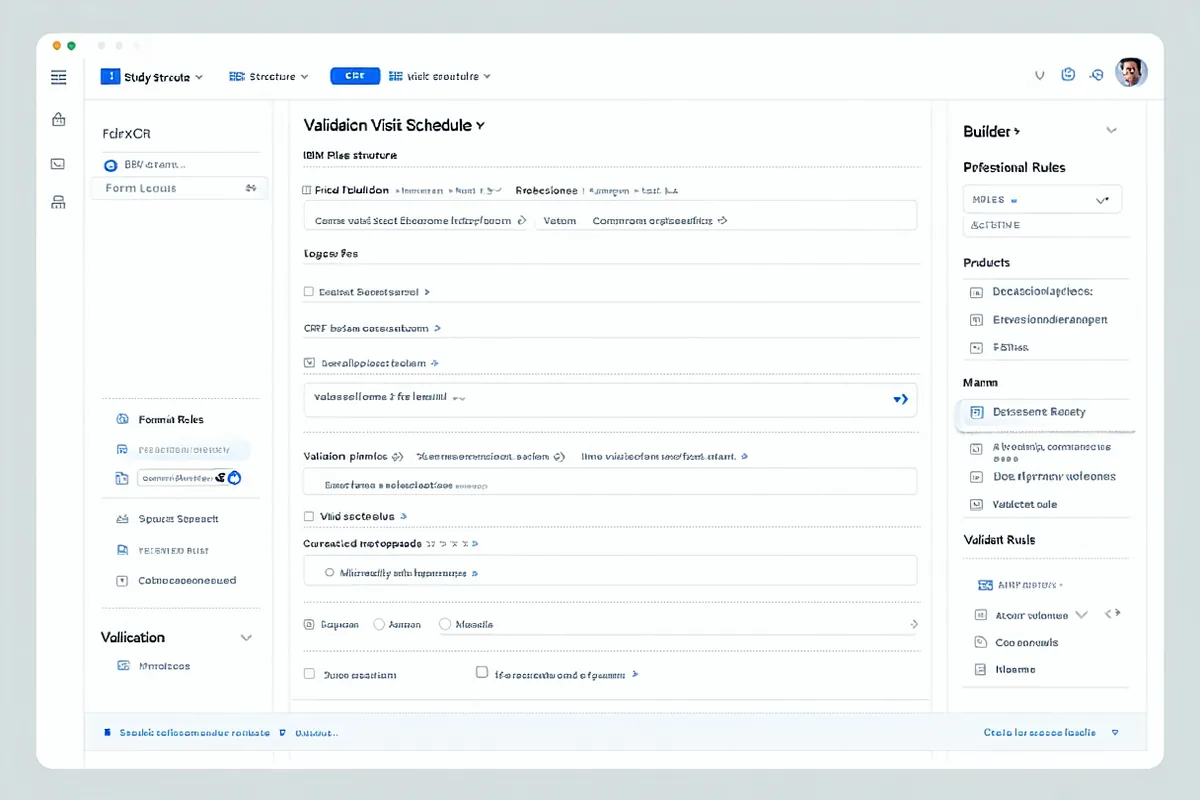
EDC Module Capabilities
EDC in the Study Timeline
The EDC module connects to every other phase of the study lifecycle — randomization, data management, site monitoring, and reporting all reference the same eCRF structure.
Protocol Ingestion
Upload DMP and protocol synopsis. Trialhelix extracts study structure, visit schedule, and endpoint definitions to seed the eCRF configuration.
CDM Review & Approval
Your team reviews the generated eCRF structure. Edits are tracked. Approval creates an audit record. UAT environment available for sponsor review.
Edit Check Application
Rule library matches checks to your data types. Custom rules can be added by study. All checks generate CDISC-compatible query codes.
Study Go-Live
Site training materials are auto-generated from the approved eCRF structure. Investigator accounts are provisioned with role-based access per site.
SDTM Mapping in Parallel
CDISC variable mappings begin at study go-live — not at data lock. SDTM domain structures are built alongside data collection and updated with each protocol amendment.
See EDC Configuration on Your Protocol
Bring your protocol synopsis to a 30-minute call and we will walk through how the EDC module would configure your specific study — forms, edit checks, and SDTM mapping.