Built by People Who've Lived the Bottleneck
Trialhelix was founded in Cambridge by clinical data professionals who spent years inside CRO operations — watching weeks disappear to manual EDC builds, redundant query cycles, and last-minute SDTM mapping sessions.
Why We Started Trialhelix
Daniel Choi spent nine years in clinical data management — first as a CDA at a Phase I oncology CRO in Boston, then as a senior CDM managing SDTM deliverables for a portfolio of rare disease programs in Cambridge. The pattern he encountered across every engagement was the same: experienced data managers spending the first three weeks of every new study rebuilding eCRF forms, visit schedules, and edit checks from scratch. The study already had a DMP. The prior study had 80% of the same structure. The tool just could not carry it forward.
In 2023, he started designing what would become Trialhelix — a platform built around the observation that CDISC SDTM mapping done at data lock is always a crunch, and that mapping done at study build is just configuration. Trialhelix was incorporated in 2024, operating from Cambridge, MA. It is not a general-purpose EDC product. It is built specifically for the Phase I and II CRO context: small study teams, consultative sponsor relationships, and CDISC submission deliverables as the terminal output of every engagement.
Trialhelix does not replace clinical judgment or remove the CDM from the approval chain. It removes the manual assembly work that precedes and follows that judgment.

Principles That Shape Every Build Decision
Regulatory Language First
Every feature is described in ICH-GCP and 21 CFR Part 11 terminology — not SaaS marketing language. Your team should be able to carry our documentation into an FDA inspection without translation.
No Workflow Forcing
We automate the repetitive parts of what your team already does. We do not ask you to adopt new SOPs, new validation schemas, or new data structures that require IRB re-approval. Trialhelix is not a general-purpose EDC system, and it is not positioned as one — it is built for Phase I and II CROs who deliver CDISC packages to sponsors and need the configuration and mapping burden reduced, not shifted.
Full Audit Visibility
Every automated action creates a timestamped, user-attributed audit log entry. You can export the full audit trail at any point in the study lifecycle — not just at data lock.
CRO-First Design
We build for CROs running multiple studies simultaneously across different sponsors and therapeutic areas. Multi-study isolation, role-based access per study, and sponsor-facing reporting dashboards are not add-ons — they are core.
Clinical Data Professionals and Engineers
Our team combines deep CRO operational experience with software engineering. Every platform decision is reviewed by someone who has managed a real clinical database.

Daniel Choi
CEO & Founder
Nine years in clinical data management across Phase I oncology and rare disease CROs. Led SDTM delivery for three NDA submission packages before founding Trialhelix. His direct frustration with manual EDC configuration overhead is the reason this platform exists.

Priya Menon
Head of Product
Seven years in clinical systems across biostatistics support and CDISC delivery at Phase II CROs. Leads the ADaM automation pipeline and Pinnacle 21 integration. Previously reduced P21 validation cycles on three consecutive data lock deliveries by restructuring SDTM domain mapping at study build.

Marcus Webb
VP Engineering
Built regulatory data infrastructure and CDISC pipeline tooling at a clinical data services firm before joining Trialhelix. Leads platform architecture, with particular focus on append-only audit trail design and study-level data isolation — the two properties that matter most when an FDA inspector asks about electronic records.
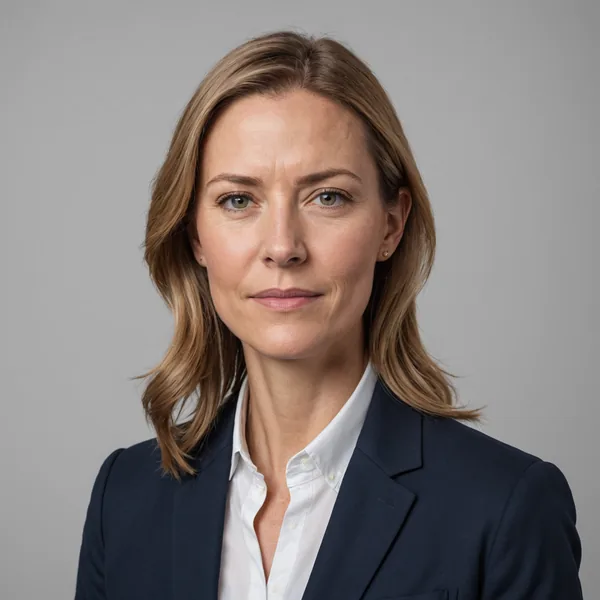
Sarah Lindqvist
Head of Clinical Operations
Former CRA and clinical operations lead with field experience across Phase I and II sites in oncology and autoimmune indications. Translates site coordinator and monitor workflows into platform design requirements — ensuring that SDV, query resolution, and adverse event capture features match what CRAs actually do at monitoring visits, not what they describe on paper.
Talk to the Team Directly
We do not route clinical inquiries through sales development. A technical call connects you directly with Daniel or Priya — someone who has worked in a CRO database before.